
Apple’s decision to equip its new Studio Display models with A19 and A19 Pro chips, along with 128GB of internal storage, has raised an obvious question. Many users are now asking the same thing: if Apple can build lightweight computing products around A-series silicon, why can’t a Studio Display with an A19 Pro, RAM and storage function like an iMac on its own?
The answer is that the hardware inside these displays is not there to turn them into standalone Macs. It is there to run the display’s own internal systems.
The chip and storage inside Studio Display are there for the monitor itself, not for user computing
Apple uses A-series chips inside Studio Display models to power an internal operating environment based on iOS technologies. That hardware is responsible for tasks such as Center Stage camera processing, color calibration, USB and Thunderbolt device management, spatial audio features and other display-side functions that operate in the background.
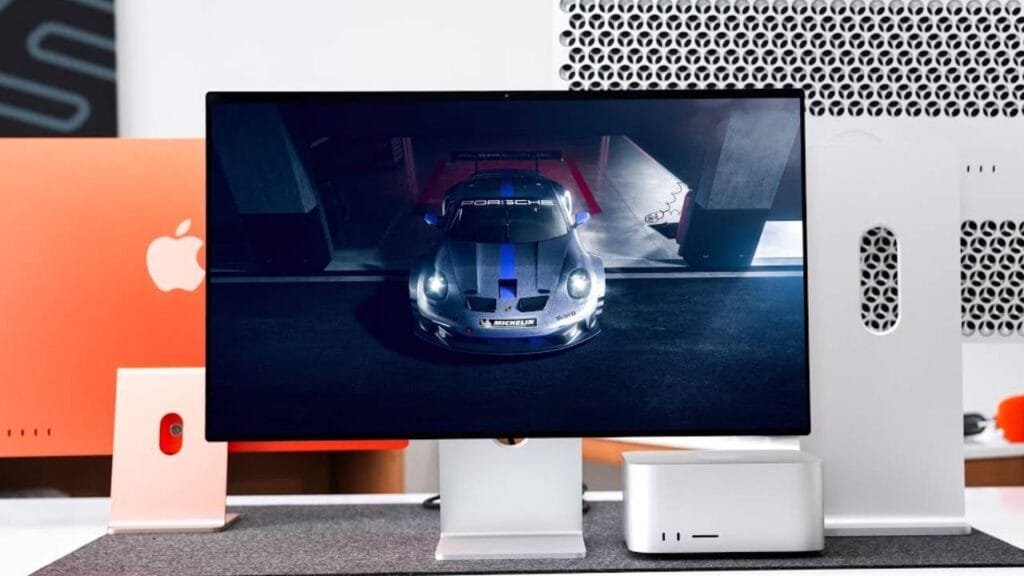
The internal storage serves that same system. The 128GB capacity is not intended for user files, apps or direct access like an SSD in a Mac. It is used for the software that runs inside the display, future firmware downloads, long-term update support and possibly internal diagnostics. In other words, this is system storage, not user-facing storage.
The previous-generation Studio Display came with 64GB of storage, so the new models double that figure to 128GB. One likely reason is supply chain efficiency.
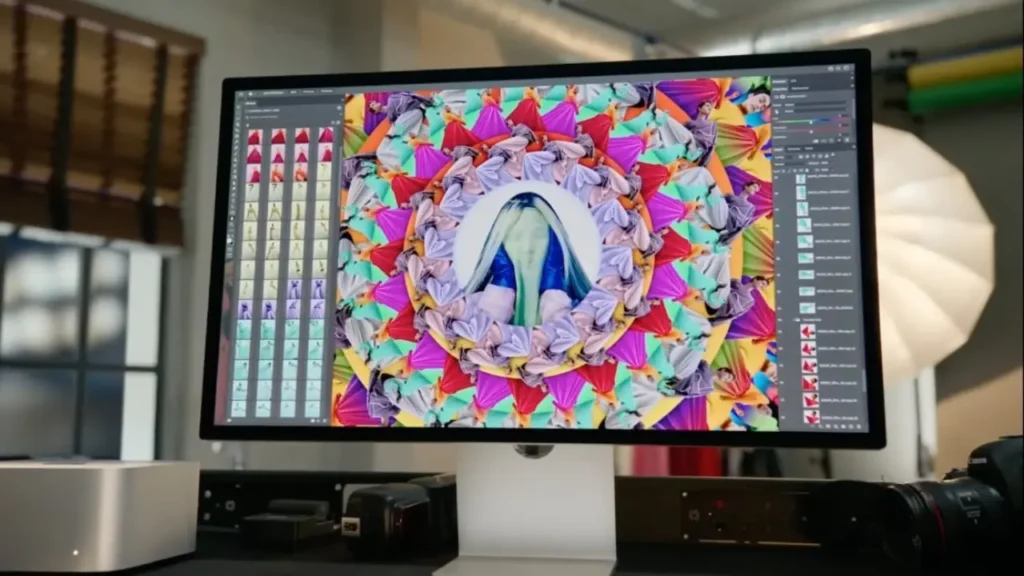
Apple may have found it more practical and more cost-effective to use existing NAND components already available through its iPhone production ecosystem instead of investing in smaller custom modules with lower capacity. That also means most of the 128GB is probably unnecessary from a strict feature standpoint, but easier to source at scale.
Apple has also increased memory alongside storage. The standard Studio Display includes 8GB of RAM, while the Studio Display XDR comes with 12GB. That memory is allocated to the display’s internal software environment and its processing tasks. It should not be interpreted as system memory in the same sense as RAM in a Mac that runs desktop apps.
This is where the comparison with a theoretical A-series Mac product starts to appear. On paper, a powerful mobile chip combined with RAM and storage could support a lightweight computer experience.
But that is not what Apple is building here. Studio Display remains a dedicated external monitor. The silicon inside it exists to support smart display functions, not to replace macOS hardware.
So while Apple has effectively placed a compact computing layer inside the monitor, it has not designed the product as a standalone desktop machine. It still depends on a connected Mac for the actual computing experience.
The built-in chip, memory and storage work behind the scenes to improve camera behavior, audio processing, connectivity handling, system responsiveness and firmware support.
In short, the presence of an A19 Pro chip, RAM and 128GB of storage inside a Studio Display does not mean Apple has hidden an iMac inside the panel. It means the monitor now has a more capable internal control system. From the outside, it is still just a display. Inside, it is running a much more advanced platform than before.

