
Luxury sedans have long come with a familiar trade-off. They offer comfort, prestige, and advanced technology, but they also tend to bring high purchase prices, expensive upkeep once the warranty ends, and steep depreciation.
That is what makes the 2026 Toyota Crown stand out. It enters the near-luxury space with a more upscale feel than most mainstream sedans, yet it stays well below the price territory occupied by traditional premium badges.
Toyota Crown positions itself as a lower-cost alternative to established luxury sedans
The pricing gap is one of the Crown’s biggest advantages. The 2026 Mercedes-Benz E-Class starts at $63,900 before options, while the most expensive version of the 2026 Toyota Crown tops out at $54,990.
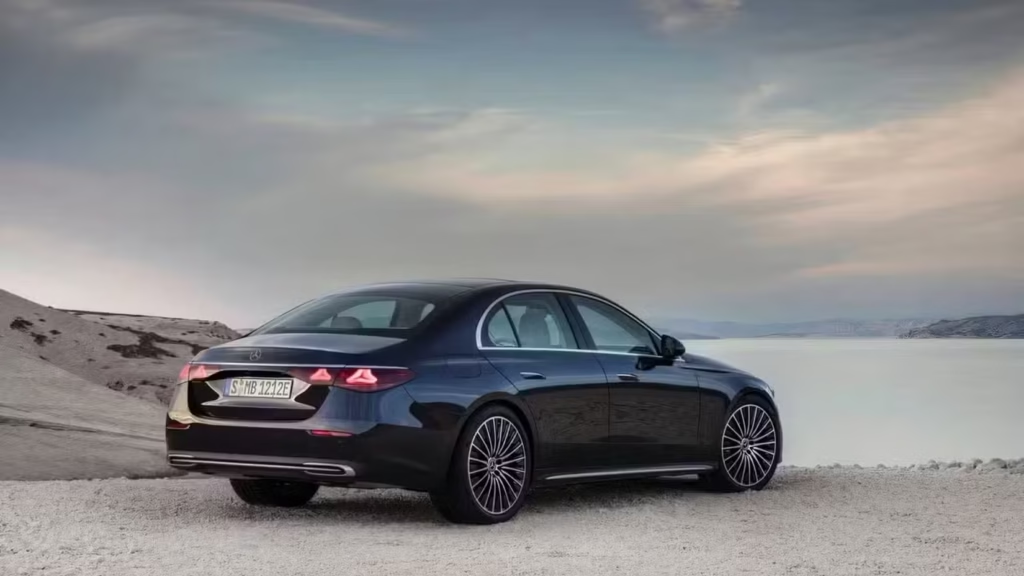
That difference gives Toyota a clear opening among buyers who want a quieter, more refined sedan without stepping into full luxury-sedan pricing.
Mercedes-Benz still holds a strong position in this segment. The E-Class has spent decades building a reputation around comfort, refinement, and technology.
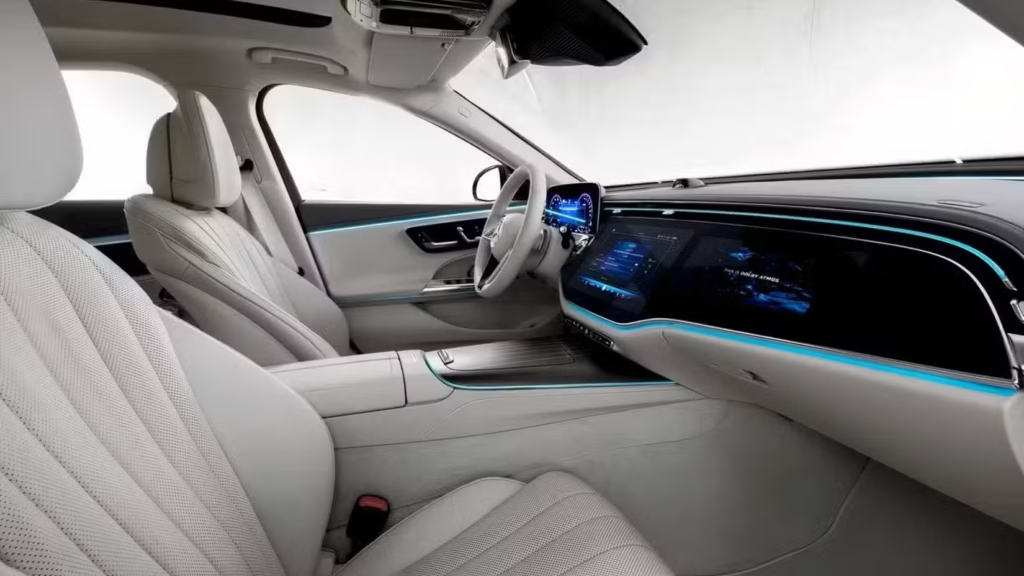
In the current lineup, it sits between the smaller C-Class and the flagship S-Class, bringing together performance, premium materials, and advanced cabin tech. Its interior follows Mercedes’ sensual purity design approach, and one of its defining features is the large MBUX Superscreen that transforms the dashboard into a glass-heavy digital interface.
The E-Class also continues to emphasize a calm and isolated cabin environment. Features such as heat- and noise-insulating glass, along with upscale materials like Nappa leather and open-pore wood, shape the character of the interior.
That philosophy has deep roots. The E-Class lineage was heavily defined by the W124 generation, built from 1984 to 1995, a model often remembered for its durability, engineering focus, and long-term toughness.
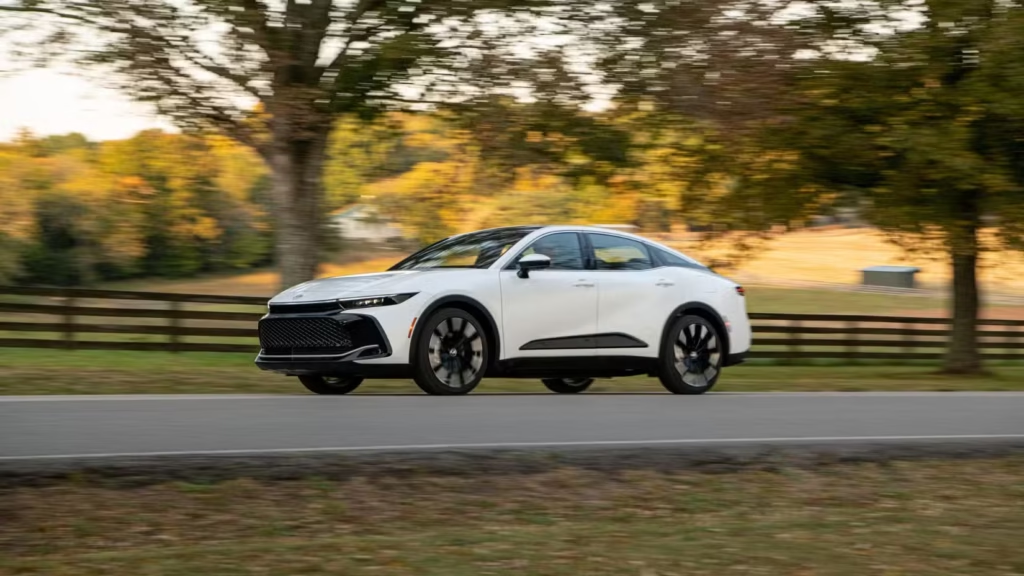
Toyota approaches this market from a different angle with the Crown. Rather than trying to replicate the image of a German luxury sedan, it blends daily usability with a more premium presentation.
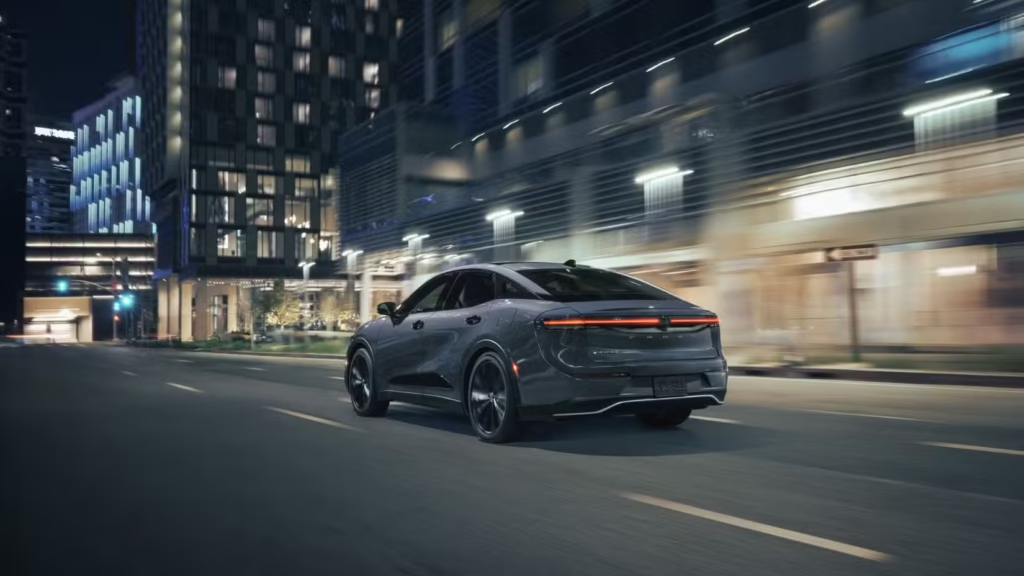
In many ways it fills the role once held by the Avalon, aimed at buyers who want a more comfortable ride, a quieter cabin, and a slightly higher seating position than a conventional sedan typically offers.
Toyota also takes a different approach to equipment. Instead of burying desirable features inside expensive option packages, the Crown includes a long list of comfort and convenience features as standard. That gives it a different kind of appeal. It may not wear a luxury badge, but the overall experience gets surprisingly close for the money.
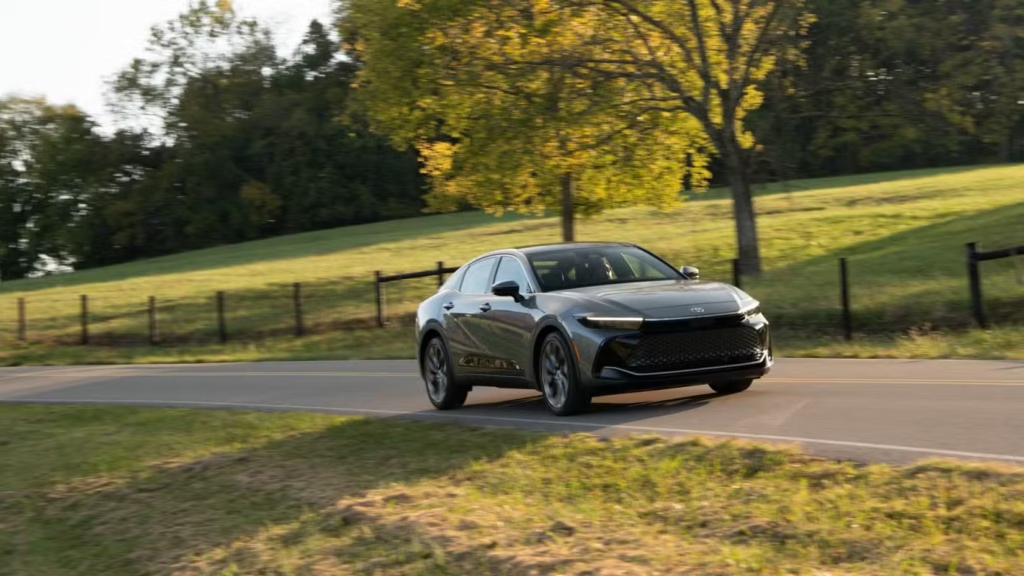
The model remains a niche product within Toyota’s broader portfolio. In 2025, Toyota sold 12,309 units of the Crown, a year-over-year decline of 37.1 percent.
Like the Avalon before it, the Crown occupies a narrower part of the lineup and can sometimes be overshadowed by Lexus models that target similar buyers.
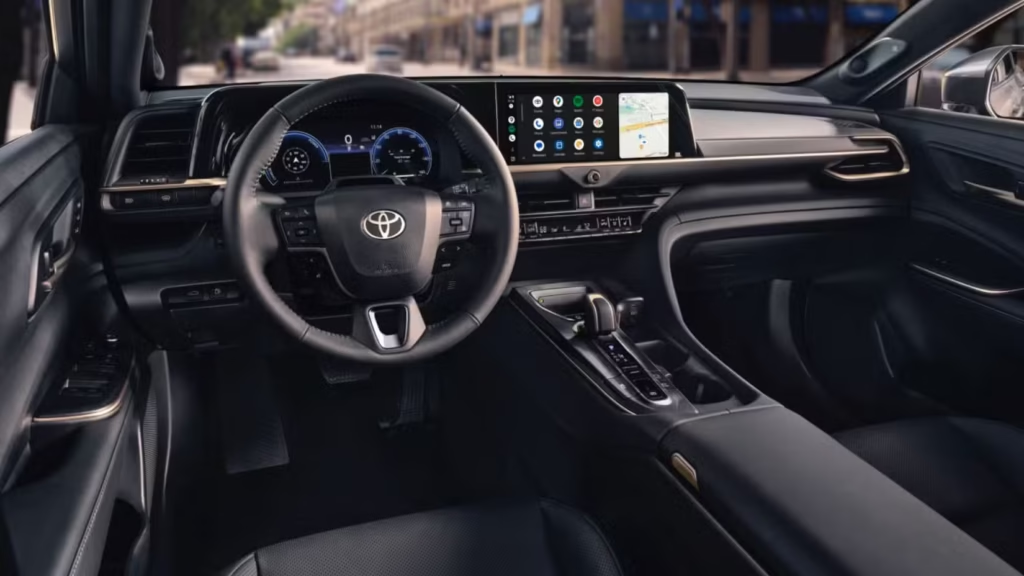
Mercedes-Benz, meanwhile, does not report E-Class sales separately in the United States, grouping the model with the C-Class, EQE, and EQE SUV under its Core Segment category.
The Crown has still earned solid results from reviewers and owners. J.D. Power gives the lineup an overall score of 80 out of 100, including 82 for quality and reliability and 81 for driving experience.
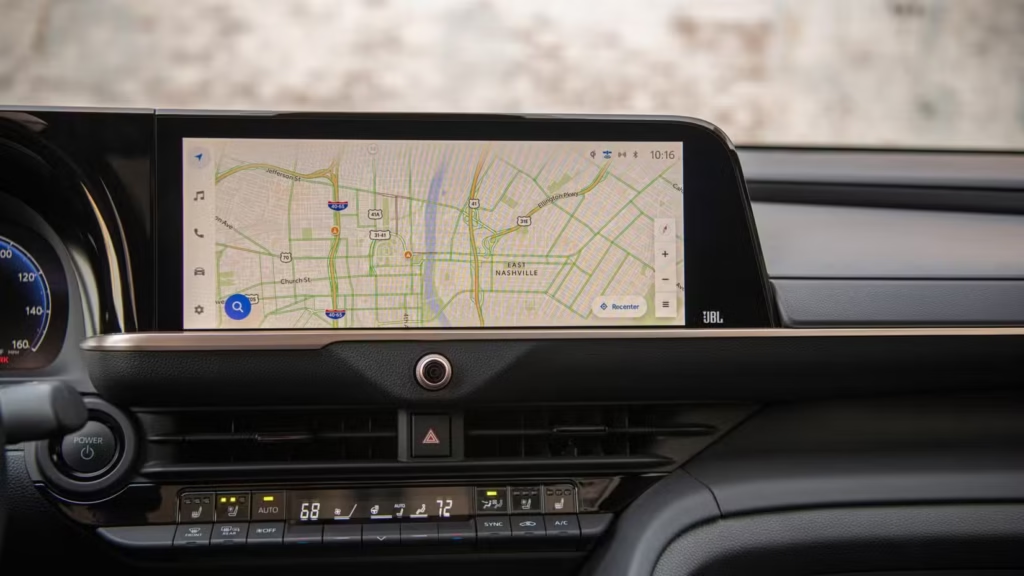
iSeeCars scores the 2026 model at 7.8 for retained value and 8.0 for safety. On Edmunds, the Crown currently carries a 4.3 out of 5 owner rating, with praise focused on fuel economy, ride comfort, and value. Interior space is one of the few recurring complaints.
The E-Class lands in a similar range. J.D. Power rates it at 79 overall, with 80 for quality and reliability, 80 for driving experience, 78 for resale, and 79 for dealership experience. iSeeCars gives it an overall 8 out of 10, including 7.8 for reliability, 7.3 for retained value, and 9.0 for safety.
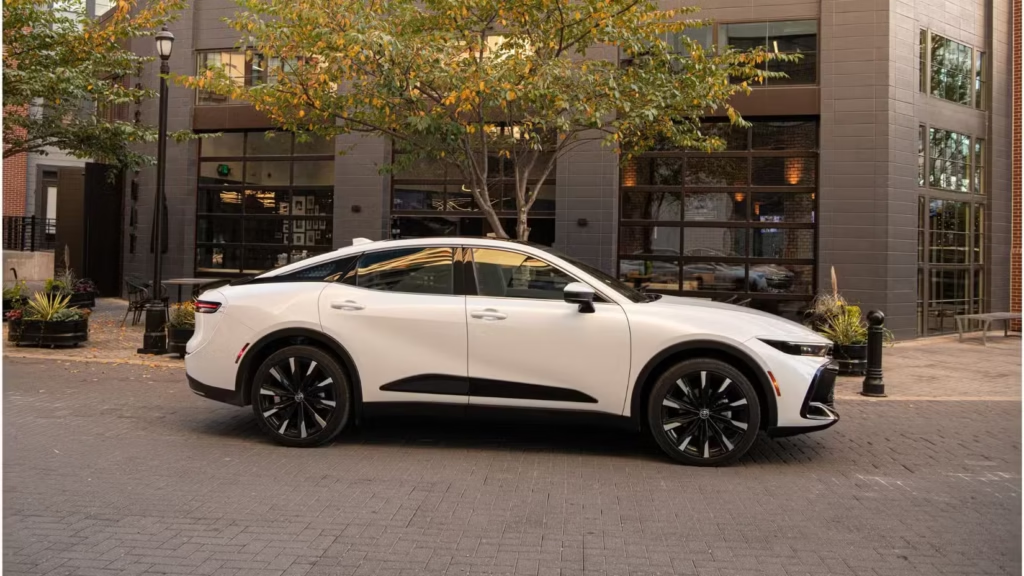
Toyota offers the 2026 Crown in four trims. The range starts with the XLE at $41,440. Even this entry model comes with leather-trimmed seats, heated and ventilated eight-way power front seats, and a 12.3-inch digital instrument cluster.
Standard equipment also includes a 12.3-inch Toyota Audio Multimedia touchscreen, wireless Apple CarPlay and Android Auto, wireless charging, smart key access for all doors, dual-zone climate control, and a six-speaker audio system.
The Limited trim starts at $45,950 and adds a fixed panoramic glass roof with a power sunshade, rain-sensing wipers, and quad-LED projector headlights. It also upgrades the audio system to an 11-speaker JBL Premium Audio setup with a subwoofer and amplifier.
Above that sits the Nightshade at $48,765. This version builds on the Limited trim but shifts the focus toward styling, adding 21-inch matte-black alloy wheels and black exterior elements such as the mirror caps, door handles, and shark-fin antenna.
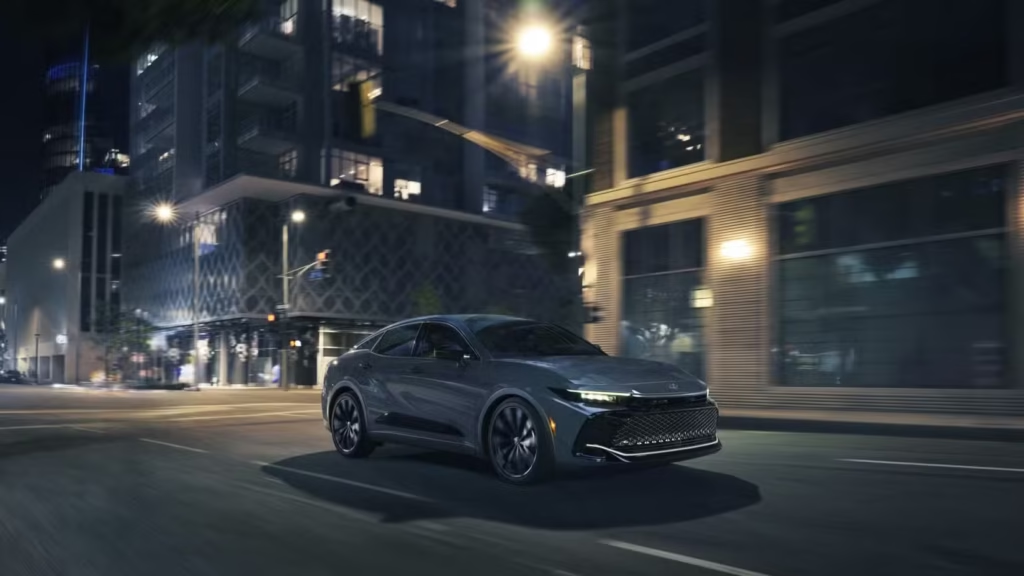
At the top of the lineup is the Platinum, priced from $54,990. It adds a 10-inch color head-up display, a panoramic view monitor with a 360-degree camera system, and Toyota’s Advanced Park self-parking system.
Buyers also get a hands-free power trunk with kick sensor, digital key support, and distinctive 21-inch machined-finish wheels with black accents.
Toyota also offers an Advanced Tech Package for the Limited trim. Priced at $2,900, it adds the panoramic view monitor, digital key capability, and 21-inch dark metallic alloy wheels. Premium paint choices such as Bronze Age and Oxygen White add another $425.
Under the hood, the Crown comes with two hybrid powertrain choices. The XLE and Limited use a 2.5-liter four-cylinder engine paired with dual electric motors and an eCVT.
This setup produces 236 horsepower and 163 lb-ft of torque, with power sent to all four wheels. Toyota says it can reach 60 mph in around 7.6 seconds, though independent testing has put it closer to 7.2 seconds. Top speed is rated at 116 mph.
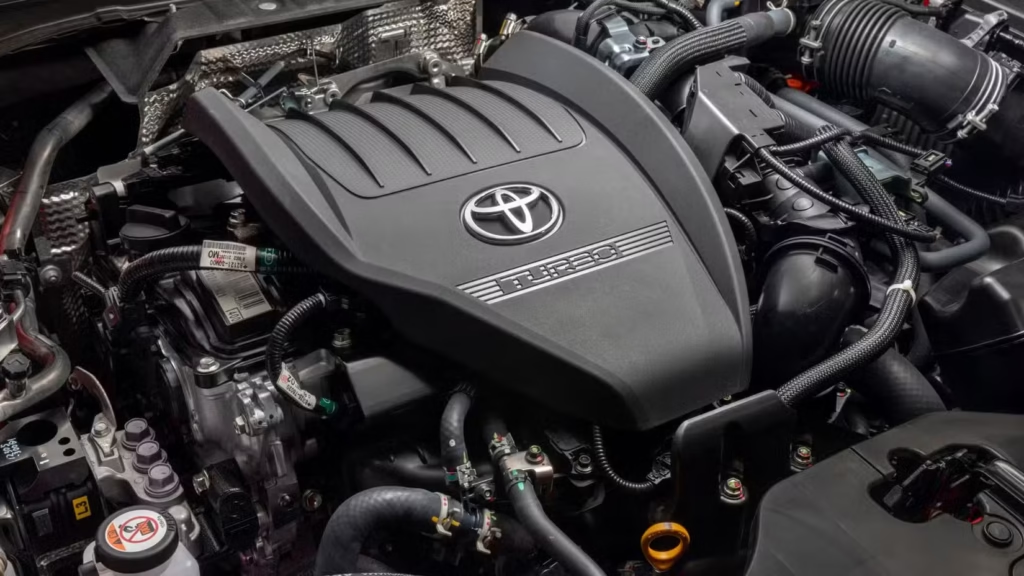
The Platinum takes a different route. It uses a turbocharged 2.4-liter four-cylinder engine with a dual-motor hybrid system and a six-speed automatic transmission. Total output rises to 340 horsepower and 332 lb-ft of torque.
Toyota estimates a 0–60 mph time of about 5.7 seconds, while top speed is listed at 129 mph. All Crown models ride on the TNGA-K platform with MacPherson struts in front and a multilink rear suspension.
The Platinum trim also adds Adaptive Variable Suspension. This system improves ride control and handling response, giving the range-topping model a more polished driving character.
Fuel economy remains one of the Crown’s strongest selling points. Naturally aspirated versions are rated at 42 mpg city, 41 mpg highway, and 41 mpg combined, with an estimated range of about 594 miles on a tank.
These models use a 0.9-kWh battery pack and are expected to save around $2,750 in fuel over five years. Estimated annual fuel cost is about $1,200, while a 25-mile drive works out to roughly $1.98, and filling the 14.5-gallon tank costs about $47.
The more powerful Platinum gives up some efficiency in exchange for stronger performance. It is rated at 29 mpg city, 32 mpg highway, and 30 mpg combined, with an estimated range of around 435 miles.
Even so, it remains fairly efficient for a 340-horsepower sedan. Estimated annual fuel cost is about $1,600, with a 25-mile trip costing roughly $2.70 and five-year fuel savings estimated at around $750.

