
NVIDIA has announced DLSS 5 at GTC, introducing a new step for AI-assisted game rendering. The company says the technology adds photoreal lighting and material detail to each frame through a real-time neural rendering model. According to NVIDIA, this is its biggest graphics breakthrough since real-time ray tracing first arrived in 2018, and it will begin rolling out this fall.
DLSS 5 pushes beyond performance and moves directly into image creation
NVIDIA says DLSS 5 works by taking a game’s color data and motion vectors for every frame, then using an AI model to enrich the image with lighting and material effects that stay grounded in the original 3D scene. The company says the result remains consistent from frame to frame and can run in real time at up to 4K resolution.
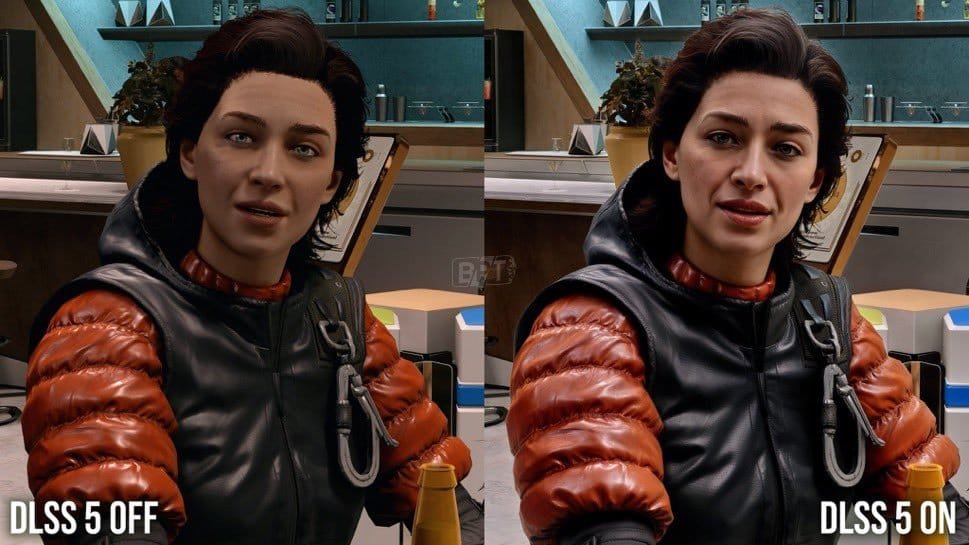
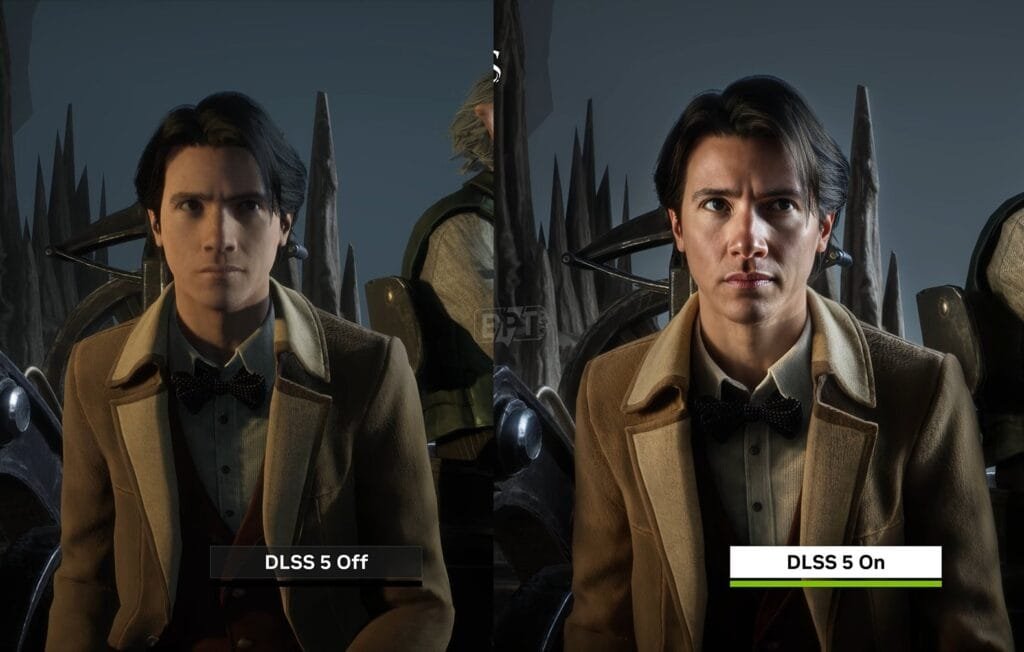
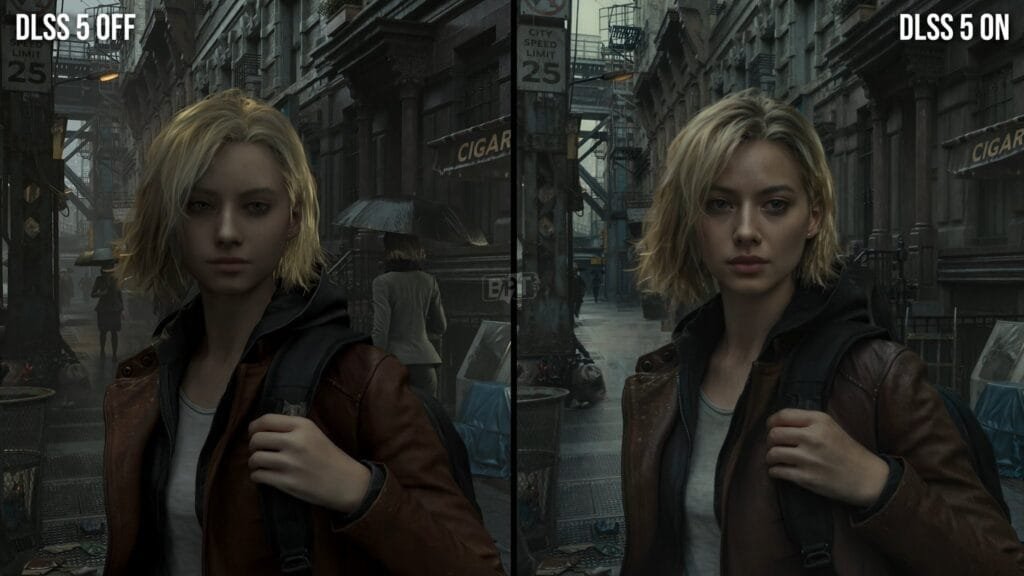
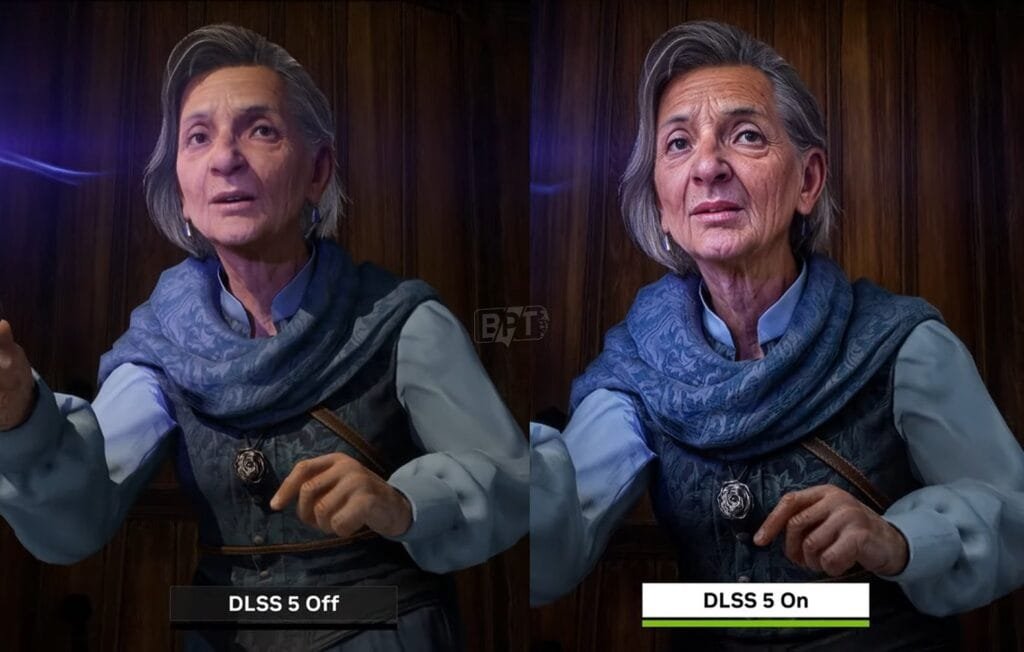
Jensen Huang, NVIDIA founder and CEO, said the company is once again reshaping computer graphics 25 years after introducing the programmable shader. He described DLSS 5 as a GPT moment for graphics, combining traditional handcrafted rendering with generative AI while preserving the creative control artists need.
NVIDIA also used the announcement to frame DLSS 5 within its broader graphics history. The company pointed to major milestones including programmable shaders with GeForce 3 in 2001, CUDA with the GeForce 8800 GTX in 2006, real-time ray tracing with the GeForce RTX 2080 Ti in 2018, and path tracing plus neural shaders with the GeForce RTX 5090 in 2025. NVIDIA says those architectural jumps have delivered a 375,000x increase in compute over time.
Announcing NVIDIA DLSS 5, an AI-powered breakthrough in visual fidelity for games, coming this fall.
— NVIDIA GeForce (@NVIDIAGeForce) March 16, 2026
DLSS 5 infuses pixels with photorealistic lighting and materials, bridging the gap between rendering and reality.
Learn More → https://t.co/yHON3nGyxE pic.twitter.com/UvF9G7tlZs
Even with that growth, the company argues that game rendering still operates under far tighter limits than Hollywood visual effects. A single game frame has roughly 16 milliseconds to be rendered, while a photoreal VFX frame in film can take minutes or even hours. NVIDIA’s position is that brute-force rendering alone cannot close that gap.
DLSS first launched in 2018 as an AI-based performance technology. It began with resolution upscaling and later expanded into full frame generation. NVIDIA says DLSS has now been integrated into more than 750 games and has become one of the industry’s standard technologies.
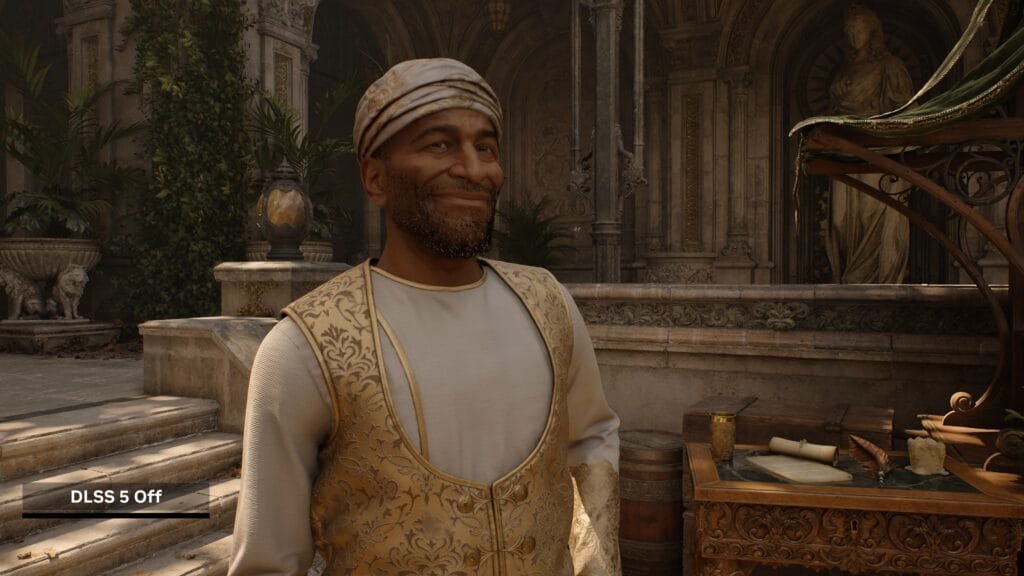
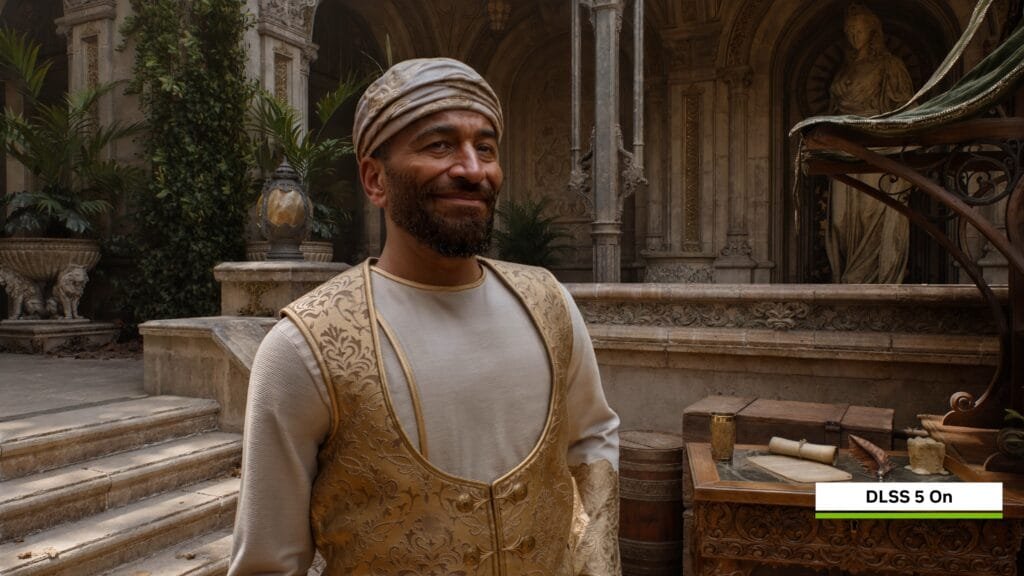
At CES earlier this year, the company introduced DLSS 4.5 and said AI was already drawing 23 out of every 24 pixels visible on screen. With DLSS 5, the focus shifts further from raw performance and deeper into visual fidelity.
NVIDIA says the new model is trained end to end to understand scene semantics from a single frame, including characters, hair, fabric, translucent skin and environmental lighting conditions such as front-lit, back-lit and overcast scenes.
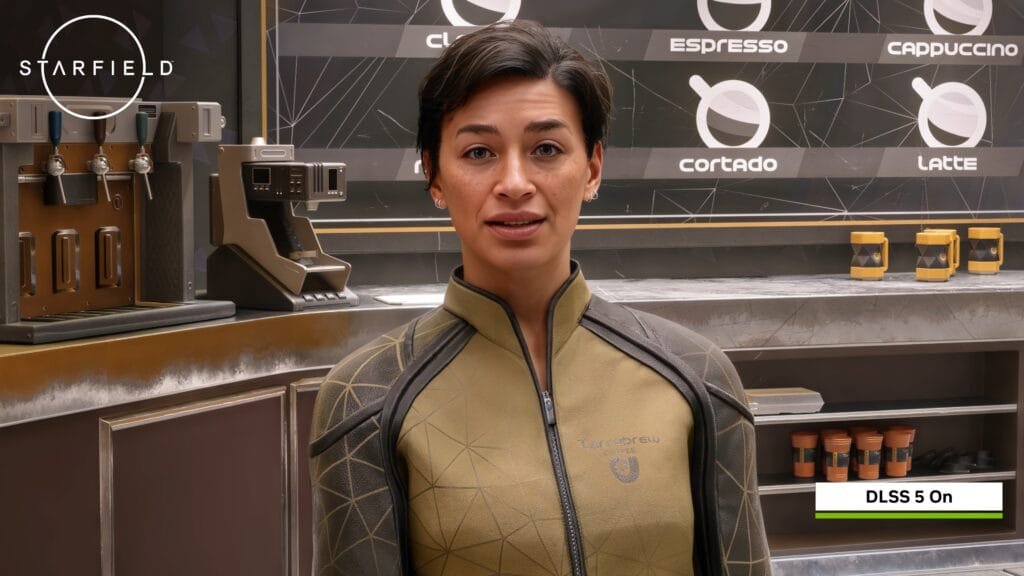
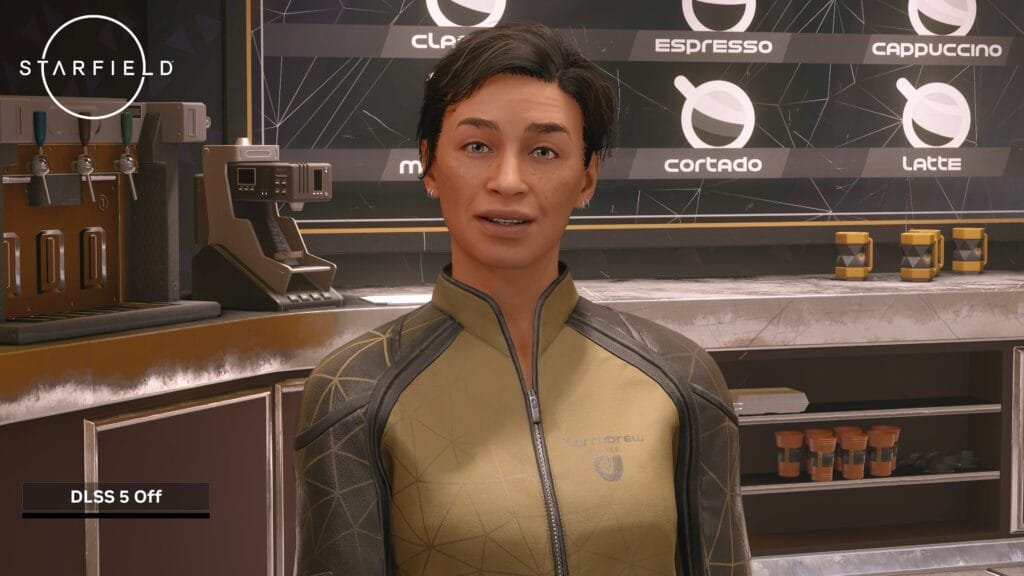
That understanding is then used to generate more precise effects such as subsurface scattering on skin, the fine sheen of cloth and light interaction across hair, while keeping the structure of the original scene intact.
The company says developers will also get detailed artistic controls. DLSS 5 includes settings for intensity, color grading and masking, allowing studios to decide where the enhancements are applied and how strong they should appear. Integration will use the same NVIDIA Streamline framework already used for existing DLSS and NVIDIA Reflex implementations.
Support is already lined up from several major publishers and developers, including Bethesda, CAPCOM, Hotta Studio, NetEase, NCSOFT, S-GAME, Tencent, Ubisoft and Warner Bros. Games. Bethesda’s Todd Howard said the company plans to bring DLSS 5 to Starfield and future Bethesda titles.
CAPCOM’s Jun Takeuchi said the technology will help push the visual quality of Resident Evil further in areas such as shadows, textures and lighting. Vantage Studios co-CEO Charlie Guillemot said DLSS 5 is helping Assassin’s Creed Shadows move closer to the kind of world the studio has long wanted to build.
NVIDIA also confirmed a list of games set to receive DLSS 5 support. That lineup includes AION 2, Assassin’s Creed Shadows, Black State, CINDER CITY, Delta Force, Hogwarts Legacy, Justice, NARAKA: BLADEPOINT, NTE: Neverness to Everness, Phantom Blade Zero, Resident Evil Requiem, Sea of Remnants, Starfield, The Elder Scrolls IV: Oblivion Remastered and Where Winds Meet.
With DLSS 5, NVIDIA is placing AI closer to the center of image generation in games rather than limiting it to performance gains. Whether it delivers on that promise will become clearer once the first supported titles arrive this fall.

